

Cardiometabolic Disease Portfolio
Taconic offers a diverse suite of models and services for your cardiometabolic studies ranging from preconditioned obese mice and humanized GEMs to custom aging and diet administration services. Browse our catalog of readily available models for your next CMD study or discuss your specific project needs with a scientist. We also have a range of resources to learn more about preclinical models used for CMD applications.
Now available! hGLP1R Mouse - This model supports research into hGLP1R biology across Type 2 diabetes and obesity, enabling deeper insights into cardiometabolic disease mechanisms.
Learn More about the hGLP1R Mouse Model!
Mouse Models for the study of Cardiometabolic Diseases
- Obesity Models
- MASLD/MASH Models
- Dyslipidemia Models
- Diabetes Models
- Renal Models
Strains for Obesity Research
Taconic offers well-characterized diet-induced obesity (DIO) models, including the widely used DIO C57BL/6NTac mouse, which reliably develops obesity and metabolic dysfunction on high-fat diets.
In addition to standard offerings, custom diet conditioning is available on a variety of genetic backgrounds and diet types — enabling tailored models for your specific research needs.


MASH Models
Taconic offers a readily available diet-induced MASH (Metabolic dysfunction-associated steatohepatitis) model on the C57BL/6NTac background, fed a high-fat, high-fructose, high-cholesterol diet to induce steatosis, inflammation, and fibrosis. This off-the-shelf model is ideal for studying liver pathology progression and therapeutic intervention.
Custom diet conditioning is also available to support alternative MASH protocols using different diets, timelines, or genetic backgrounds — giving you the flexibility to align the model with your research goals.

Diet Induced MASH B6
Taconic is the first and only vendor to offer a diet-induced MASH mouse model off the shelf. Explore Taconic’s Diet-Induced MASH B6 mouse model.

Highlighted in Nature
An unbiased ranking of murine dietary models based on their proximity to human metabolic dysfunction-associated steatotic liver disease (MASLD).
Read this paper to learn about the translatability of different MASH diets.
Dyslipidemia Models
Taconic offers a portfolio of genetically engineered dyslipidemia models designed to replicate key features of human lipid metabolism and atherosclerosis risk. These models are valuable tools for studying cardiovascular disease, lipoprotein regulation, and lipid-lowering therapeutics.
All models are available off the shelf, with optional diet conditioning services (e.g., Western or high-fat diets) to enhance disease progression or match your study design.


Paper
Lipid-encapsulated mRNA encoding an extended serum half-life interleukin-22 ameliorates metabolic disease in mice. Check out Figure 5 to see the phenotypic response of ApoB100/CETP B6 mice on a MASH diet.
Diabetes Models
Taconic offers well-characterized genetic models of diabetes for studying disease onset, progression, and therapeutic response in both type 1 and type 2 diabetes.

Both models can be supported with custom breeding, rederivation, or colony management services, and diet conditioning is available to further modulate disease severity or onset.

DIO B6 Mice demonstrate pre-diabetic biomarkers
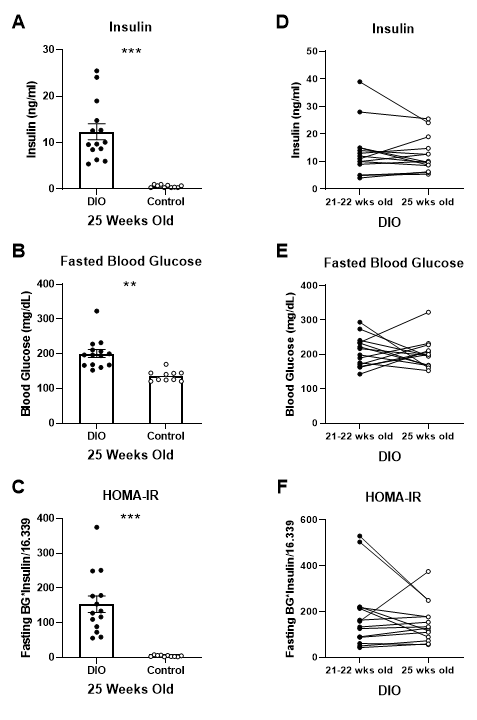
Metabolic parameters in Taconic's Diet Induced Obese (DIO) B6 mouse. Insulin, fasted blood glucose and HOMA-IR in DIO B6 compared to wild type C57BL/6NTac controls (A-C) or for DIO B6 at two different longitudinal timepoints (D-F). Insulin sensitivity assessed after an acclimation period. Animals were fasted for 5-6 h. After fast, blood glucose levels taken via tail nick with One Touch glucometer. Immediately, extra blood collected for insulin ELISA. Blood was collected in EDTA-coated microvette tubes (Fisher # NC9041302). Ultra Sensitive Mouse Insulin Kit from Crystal Chem (#90080) used to perform insulin ELISA, with protocol followed according to manufacturer's instructions. Data provided by an anonymous biopharmaceutical company.
Renal Models
Kidney disease is a core component of cardiometabolic dysfunction, with diverse etiologies spanning metabolic, genetic, and injury-driven mechanisms. Taconic provides integrated solutions to model kidney disease across these pathways, enabling translational insights from early discovery through preclinical development.


Featured Cardiometabolic Disease Resources


The Best Solution Starts Here

Study-Ready Disease Models
Access validated Obesity, MASH, Diabetes, and Dislipidemia models, many of which are on the C57BL/6NTac (B6) background lacking the Nnt mutation and optimized for cardiometabolic research.
Full-Service In Vivo Phenotyping
Talk to us to learn more about our in vivo phenotyping capabilities
Custom Diet Conditioning
Save 6–12 weeks of ramp-up time with mice and rats preconditioned on your exact diet — including high-fat, MASH, Western, or custom nutrition protocols, with cohorts delivered at your specified cadence.
Microbiome & Diet-Sensitive Housing
Maintain study integrity with controlled housing and diet handling for microbiome-sensitive models, including germ-free and gnotobiotic support on request.
Custom Model Generation
Need a unique genetic background or pathway modification? Taconic offers complete model creation via CRISPR, ES cell, or embryo microinjection technologies.
Colony Management & Scalability
From pilot cohorts to large-scale studies, Taconic maintains, expands, and ships your colonies globally — with defined health status and barrier conditions.

How can we help you?
Fill out the form to connect with us:
Custom Diet Conditioning
In addition to off-the-shelf diet-conditioned models, Taconic can also deliver study-ready cohorts preconditioned on standard or custom diets.
- Customizable Diets – choose your formula, animal model, and diet-conditioning duration
- Study-Ready Cohorts – Animals arrive preconditioned, at your specified cadence, maximizing vivarium capacity for therapeutic intervention studies
- Save Weeks of Prep Time – Avoid 6-12 week diet start-up time at your site
- Reproducibility & Control – Standardized procedures by trained staff to increase reproducibility between cohorts
- Scientific Support – Consultation on diet and model selection provided by PhD level scientists
Use this tool to identify a diet strategy aligned with your research goals
How it works:
You choose the diet conditioning parameters with the help of a Taconic Scientific Solutions Consultant
Taconic conditions cohorts to your specifications
Animals arrive ready for dosing or phenotyping
| Diet Type | Description | Therapeutic Applications |
|---|---|---|
| High-fat diet | 40-60 kcal% fat, typically from lard Option: L-NAME in diet | Obesity, metabolic disease 2-hit HFpEF model |
| Western diet | 40-45 kcal% from fat, lard based or other; may contain additional fructose or sucrose; added cholesterol | Atherosclerosis, obesity, metabolic syndrome |
| MASH diet | High-fat, high-fructose, high cholesterol models such as the modified-Amylin diet Methionine and choline deficient diets Choline deficient diets | MASLD with varying degrees of translatability and fibrosis |
| Adenine enriched diet | 0.15-0.2% for mice 0.75% for rats | Acute or chronic kidney disease |
| Low fat diets | 10-15% fat, purified ingredient formulation | Control diet for disease model |
| Inducible model diets | Doxycycline or tamoxifen incorporated into a standard diet | Various |
Custom Research Solutions for Cardiometabolic Disease Research
Comprehensive In Vivo Solutions for Obesity, Diabetes, MASH, and Cardiovascular Disease
Taconic offers a complete suite of preclinical services to support drug discovery and translational research in cardiometabolic disease. Whether you need ready-to-use disease models, custom diet conditioning, or full-service phenotyping support, our offerings are designed to accelerate your program while maintaining scientific rigor and reproducibility.
Study Services
- Custom food or water administration
- Compound dosing
- Body weight tracking
- Food intake monitoring
- Blood glucose measurements
- Serum and tissue collections
- Surgical services, including: catheterizations, nephrectomy, myocardial infarction, and transverse aortic constriction
Model Generation Solutions
- Expert-guided, tailored solutions
- Licensed gene editing toolkit
- Quality control with built-in derisking
- ExpressMODEL® for accelerated timelines
- Smooth transition to colony management
Colony Management Solutions
- Expert guided custom solutions
- Flexible housing options
- Global IHMS™ health standards
- Full project plans with timeline, budget & risk
- Integrated Add-on services: diet conditioning, specimen collection
Upcoming Webinar | October 27, 2026 | 11:00 AM ET / 4:00 PM CET
Join Taconic for a Webinar Hosted by Labroots
Building Translational Cardiometabolic Disease Models: Strategies for Modern Preclinical Drug Development
As cardiometabolic drug development continues to evolve, researchers face increasing pressure to select preclinical models that generate clinically relevant and actionable data. Yet no single model can fully capture the complexity of human disease, making thoughtful study design and model selection critical for translational success.
This webinar will explore practical strategies for building translational cardiometabolic disease models that align with specific research objectives and therapeutic hypotheses. Key considerations for species selection, disease induction, and study design will be discussed, with an emphasis on understanding how different modeling approaches can impact biological outcomes and translational relevance. The session will also examine the role of genetic modifications, humanized biology, and integrated disease paradigms in addressing increasingly complex research questions.
Through real-world examples, attendees will gain a framework for selecting and combining model components to better reflect human physiology and disease progression. Participants will leave with practical considerations for designing preclinical studies that support decision-making across discovery, translational research, and drug development programs in obesity, metabolic disease, cardiovascular disease, and related cardiometabolic indications.
- Compare the advantages and limitations of different species, disease induction approaches, and model systems for cardiometabolic disease research.
- Evaluate how genetic modifications, target humanization, and study design choices influence translational relevance and experimental outcomes.
- Design a translational preclinical strategy that aligns model selection with a specific therapeutic hypothesis or drug development objective.
Presented by: Laura Griffin, PhD | Associate Director, Cardiometabolic Portfolio
Meet the Speaker

Laura Griffin, PhD 
Associate Director, Cardiometabolic Portfolio
Dr. Laura Griffin has been working with preclinical models for a decade and is experienced in choosing appropriate models for various research applications. She obtained her PhD in Food Science and Technology at Virginia Tech, where she focused on the mechanisms by which dietary bioactive compounds influence the onset of metabolic syndrome using preclinical models. As a postdoctoral fellow at the Plants for Human Health Institute, her research shifted to focus on the impact of the gut microbiome on the metabolism of bioactive compounds. In addition to her expertise in metabolic diseases in preclinical models, Dr. Griffin is also versed in laboratory animal diets and their usage in preclinical applications.
Featured Cardiometabolic Disease Resources

Get In Touch
Book a complimentary consultation or get support for an existing order
If you need immediate assistance, please contact Customer Service:
Taconic Corporate Offices
Email: info@taconic.com
Phone: +1 (518) 697-3900
273 Hover Ave., Germantown, NY 12526
North American Customer Service
Email: info@taconic.com
Phone:
+1 (518) 697-3915
Toll-free:
+1 (888) 822-6642
Hours:
(Monday - Friday): 7 a.m. - 6 p.m. ET
European Customer Service
Email: info@taconic.com
Phone (Europe and Denmark):
+45 70 23 04 05
Phone (Germany):
+49 214 50 68 023
Hours: (Monday - Friday):
7 a.m. - 5 p.m. CET