Background & Aims
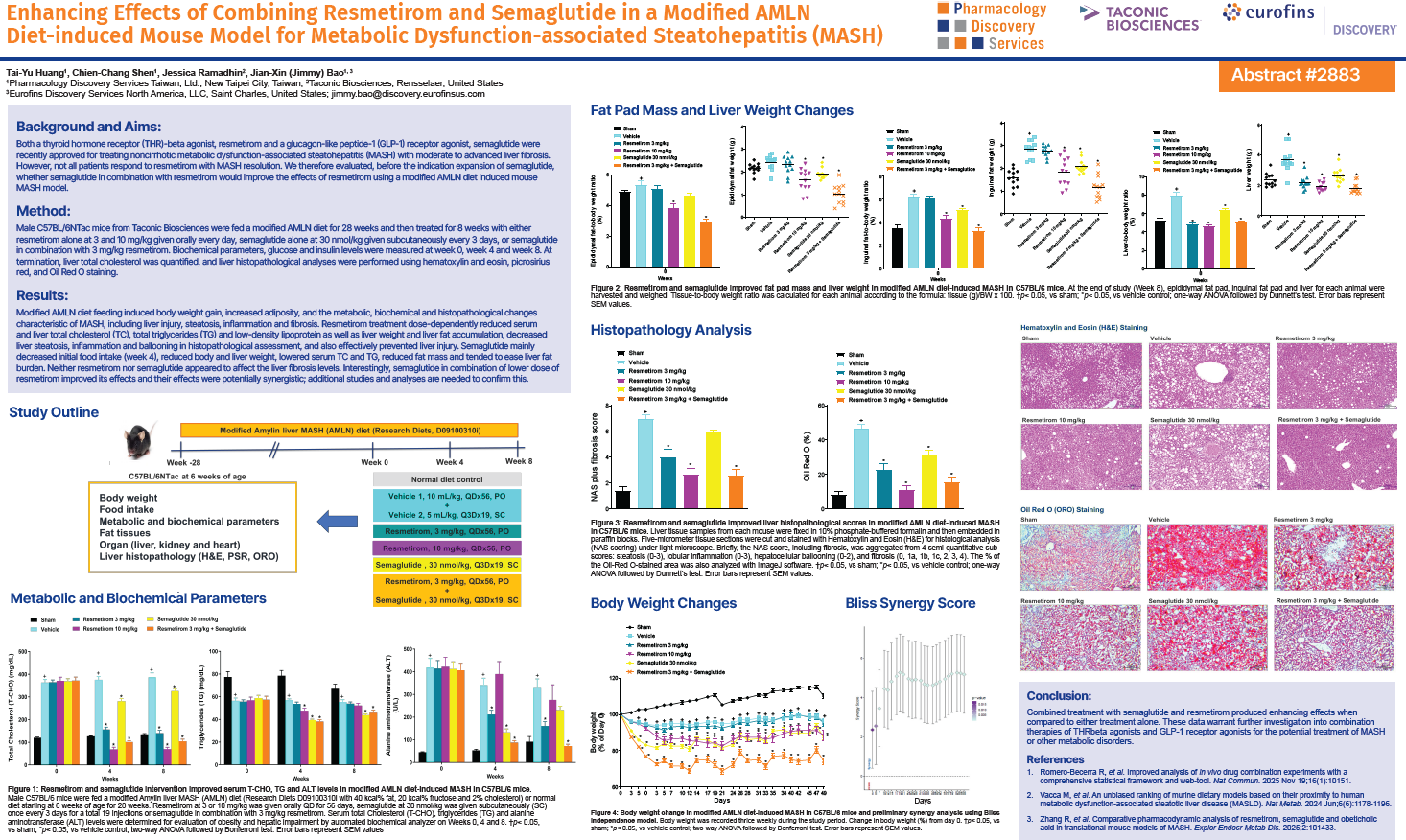
Both a thyroid hormone receptor (THR)-beta agonist, resmetirom and a glucagon-like peptide-1 (GLP-1) receptor agonist, semaglutide were recently approved for treating noncirrhotic metabolic dysfunction-associated steatohepatitis (MASH) with moderate to advanced liver fibrosis. However, not all patients respond to resmetirom with MASH resolution. We therefore evaluated, before the indication expansion of semaglutide, whether semaglutide in combination with resmetirom would improve the effects of resmetirom using a modified AMLN diet induced mouse MASH model.
Method
Male C57BL/6NTac mice from Taconic Biosciences were fed a modified AMLN diet for 28 weeks and then treated for 8 weeks with either resmetirom alone at 3 and 10 mg/kg given orally every day, semaglutide alone at 30 nmol/kg given subcutaneously every 3 days, or semaglutide in combination with 3 mg/kg resmetirom. Biochemical parameters, glucose and insulin levels were measured at week 0, week 4 and week 8. At termination, liver total cholesterol was quantified, and liver histopathological analyses were performed using hematoxylin and eosin, picrosirius red, and Oil Red O staining.
Results
Modified AMLN diet feeding induced body weight gain, increased adiposity, and the metabolic, biochemical and histopathological changes characteristic of MASH, including liver injury, steatosis, inflammation and fibrosis. Resmetirom treatment dose-dependently reduced serum and liver total cholesterol (TC), total triglycerides (TG) and low-density lipoprotein as well as liver weight and liver fat accumulation, decreased liver steatosis, inflammation and ballooning in histopathological assessment, and also effectively prevented liver injury. Semaglutide mainly decreased initial food intake (week 4), reduced body and liver weight, lowered serum TC and TG, reduced fat mass and tended to ease liver fat burden. Neither resmetirom nor semaglutide appeared to affect the liver fibrosis levels. Interestingly, semaglutide in combination of lower dose of resmetirom improved its effects and their effects were potentially synergistic; additional studies and analyses are needed to confirm this.